Australia has identified Kenya as one of three priority African partners for deeper mining and investment ties.
As Canberra seeks to strengthen access to strategic resources and diversify critical mineral supply chains amid intensifying global competition, Kenya was named alongside South Africa and Ghana as states with which Australia has strengthened relations, citing growing trade and investment in mining and other critical sectors.
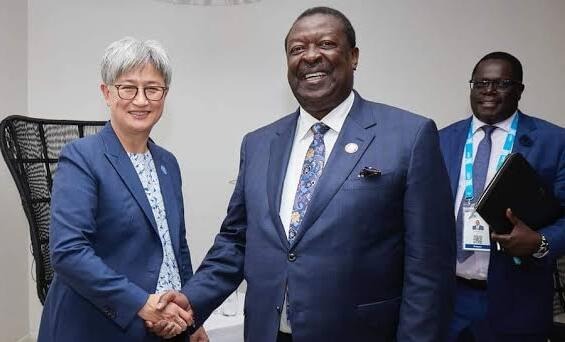
"In Africa, we have strengthened relationships with South Africa, Kenya and Ghana, including growing trade and investment in mining and other critical sectors," Australia Foreign Affairs Minister Penny Wong Wong said in a statement enumerating the new foreign policy on November 24. The statement was titled Securing Australia's Future in a Changing World.
This places Kenya within Australia's broader economic diplomacy as it seeks new partnerships to secure strategic resources, reduce dependence on concentrated supply chains and expand its influence beyond traditional partners.
The mining dimension is significant given Australia's growing interest in Kenya's mineral potential, including the niobium and rare earth deposits at Mrima Hill in Kwale county.
An Australian mining consortium led by RareX, in partnership with Iluka Resources, was among three shortlisted bidders competing for the Mrima Hill project.
However, Kenya on November 19 issued a notice of intention to award the project to the US-led Frontier Minerals Consortium, comprising Frontier Minerals LLC, Bunker Hill Mining Corporation, ReElement Technologies and American Resources Corporation.
The RareX-Iluka consortium was ranked second and has announced plans to challenge the proposed award, alleging the successful bidder failed to meet the stipulated deadline for submitting its expression of interest.
RareX said it would lodge a procurement-related complaint before the December 10 deadline, arguing its consortium should receive the award as the highest-scoring eligible bidder.
The company said its proposal was designed to give Kenya a larger share of the mineral value chain through local processing and refining.
Under the proposal, ore from Mrima Hill would be beneficiated in Kwale, with further refining into mixed rare earth carbonate at a proposed facility in the Dongo Kundu Special Economic Zone in Mombasa. The material would then be separated into individual rare earth oxides at Iluka's refinery in Western Australia.
The consortium also proposed further downstream processing in Kenya and a 10 per cent free-carried interest for the National Mining Corporation.
"We believe the RareX–Iluka Consortium offers Kenya the strongest technical solution for Mrima Hill, and a partnership that sits comfortably alongside Kenya's relationships with all of its international partners," the company's leadership said in a November 19 statement.
Mrima Hill is considered one of Kenya's significant strategic mineral prospects, with deposits of niobium and rare earth elements used in advanced manufacturing, electronics, renewable energy technologies and aerospace applications.
The government has previously estimated and inferred resources running into hundreds of millions of tonnes.
Australia's renewed interest in African mining comes as critical minerals become increasingly important to its economic and national security calculations.
Wong warned that concentrated supply chains and restrictions on access to essential resources were increasingly being used as instruments of geopolitical influence.
"Restrictions on rare earths exports have shown how quickly concentrated supply chains can become chokepoints," she said.
Australia is seeking to position itself as a reliable supplier of critical minerals while building partnerships with countries that can contribute to diversified global supply chains.
The new strategy also signals Canberra's intention to deepen engagement with African institutions, including backing the African Union's membership of the G20.
The growing interest from Australian mining companies presents Kenya an opportunity to attract investment, expertise and mineral processing technology, while raising questions about how much value the country can retain from its natural resources.